
Money20/20 Europe once again provided a valuable snapshot of where the fintech and payments industry is heading. While artificial intelligence remained a dominant theme, the broader conversati...
Sustainable materials and emerging technologies are among the key trends driving growth in the flexible packaging segment of the market.
- Flexible packaging typically includes films, pouches, bags, wraps, laminates, flexible films (mono‑ or multi‑layer), foil laminates, which are utilized across the food industry (fresh produce, frozen, ready meals, convenience foods, etc.), but also multiple industries such as pharmaceuticals, personal care, and non‑food.
- The functional requirement of flexible packaging is to provide barriers (to the likes of oxygen, moisture, light), durability & protection, sealing, printability, and more recently the trend in the production of flexible materials has moved to sustainability (recyclability, compostability, reduce waste, etc.).
- Production of flexible materials include plastics, aluminum foils, paper, along with newer biobased / compostable materials (such as fibre-based compost materials).
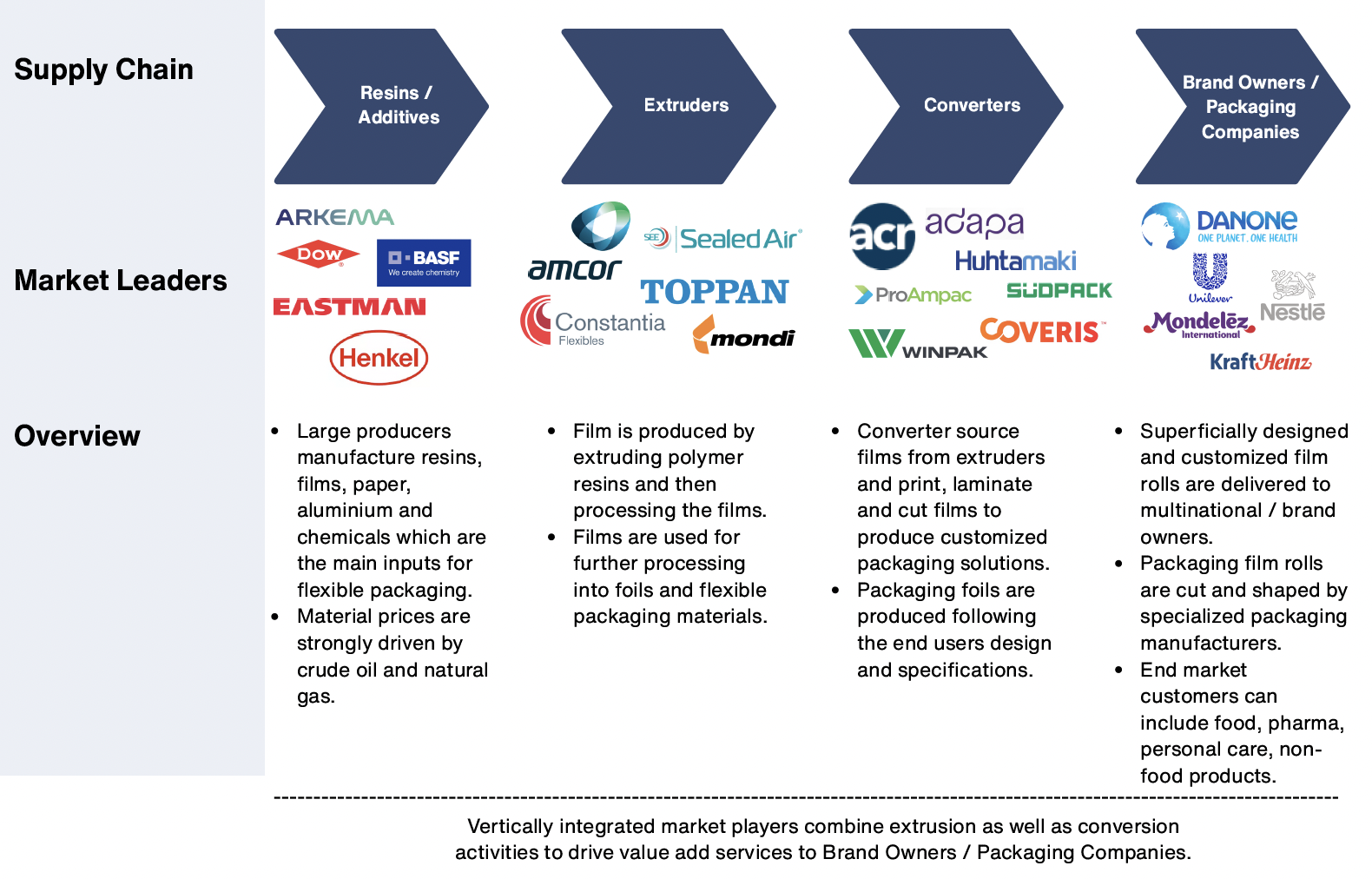
INDUSTRY VALUE CHAIN

GLOBAL DRIVERS OF INNOVATION
Several key drivers are pushing innovation across the flexible packaging segment.
- Regulatory Pressures: Reducing carbon footprint / “circular economy” goals.
- Growing Consumer Demands: Sustainable packaging solutions along with a desire for convenience.
- Demanding Brand Owners: Want customization capability, coupled with simplified packaging lines.
- Technological Advancements: Advances in material science, coatings, printing & equipment.
- Rising Raw Material Costs: Biobased materials are typically more expensive; having scale matters.
Related Insights
M&A guidance, backed by real experience
Whether you’re exploring a sale, raising capital, or simply want an outside perspective on where your business stands, our advisors are ready to listen. Reach out to start a confidential conversation with the FOCUS team.