As a premier global middle market investment bank, FOCUS partners with owners to deliver results through expert M&A, capital raising, and strategic advisory.
The Changing Beauty Landscape and What It Means for M&A
July 10, 2026
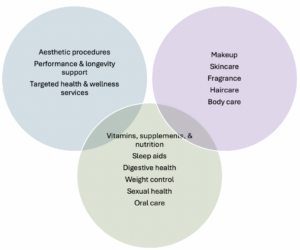
De-stress gummies. Dream patches. Medical grade skincare. The beauty category is entering into a new era, where it’s about looking good and feeling good. Expanding beyond core segments (makeup, skincare, haircare), today the category blurs the lines between traditional beauty, health, and wellness. The shift is reshaping beauty M&A, bringing new buyers to the market and offering founders exit optionality.
Changing consumer preferences and the broadening definition of beauty is fueling growth across a massive market. The global beauty market is estimated to be $450 billion and the broader wellness market a staggering $2 trillion. As the industry evolves, so too are the avenues for brands to reach shoppers. Look at the shelves of beauty retailers: a skin supplement promising wrinkle support isn’t out of place next to jar of night cream (and the maker of that night cream might be the eventual acquirer of that supplements brand).
Key Themes
Beauty is no longer confined to a bathroom or one aisle in a store. It’s as much about health and wellness as it is makeup and hair products. The doctor’s office, grocery store, gym – beauty is extending across a consumer’s lifestyle.
The evolving beauty category is creating healthy competition among acquirers and changing the traditional M&A playbook. Historically, acquisitions have been driven by large strategics like Estée Lauder, L’Oreal, Unilever, P&G, Coty, and Shiseido – global powerhouse brands that span geographies, reach across customer tiers, and ultimately, define the market. Acquisitions have helped these groups tap into new customer segments and capitalize on emerging trends, while giving founders access to their global distribution, expertise, and brand-building capabilities.
The buyer pool is growing, however. Several consumer-focused private equity firms are concentrating on beauty and personal care, family offices are backing breakout brands, and founder-led platforms are becoming acquirers. Large-scale CPG companies are also deepening their focus on beauty and wellness, using M&A to expand into high-growth categories. While large strategics remain core to dealmaking, the broadening buyer universe offers greater exit opportunities for founders.
Notable M&A Transactions in Beauty & Wellness
Why Private Equity Is Turning to Beauty
Beauty’s high gross margins, relatively low capital requirements, and recurring revenue from loyal customers (plus its recession resilience) makes it an attractive category for financial buyers. The consistent appetite of large strategics also provides a reliable, premium path to exit.
Sought-After Segments
Prestige & Clinical Skincare
A dominant category for M&A, driven by consumer demand for science-backed, dermatologist-endorsed products with clinically proven efficacy. The consumer shift toward skin-first beauty has made this a high-conviction category for both PE and strategics.
Fragrance
One of the fastest-growing and most margin-rich segments. Strong brand loyalty and consumer demand is driving PE interest with particular buzz around niche and indie brands – TSG’s acquisition of Salt & Stone reflects this.
Haircare
Consumers are investing in hair health, much like skin – scrutinizing ingredients, building routines, and demanding results. Large players are targeting both the professional and premium segments – L’Oreal acquired professional line Color Wow, while Henkel added Olaplex to its portfolio, strengthening its position in the premium, science-led haircare space.
Wellness + Beauty
Viewing wellness as an extension of beauty, buyers are snapping up brands that fit into daily health routines. Large CPG sees cross-category appeal and long-term growth opportunities. Examples: P&G acquired digestive wellness brand Wonderbelly, while Unilever (doubling down on beauty) purchased greens gummy supplement Grüns.
Men’s Grooming & Personal Care
A segment that’s lagged in premiumization relative to women’s beauty, men’s grooming is attractive to acquirers looking for white space. Unilever’s acquisition of Dr. Squatch reflects a strategic bet on an underserved demographic and naturals-driven positioning.
What Buyers Are Looking For
While beauty is an attractive category for consumer M&A, buyers are both strategic and measured in their acquisition decisions. Recent transactions show that fundamentals are driving valuation – buyers are rewarding brands that demonstrate predictable cashflow (high repeat purchase rates), healthy unit economics (operational discipline), and clear differentiation (cultural relevance and product/service credibility). Owning a consumer problem or being embedded in a ritual not only shows brand durability, but it also signals to buyers there are opportunities for expansion, from product innovation to category expansion.
The beauty M&A landscape has rarely looked more dynamic, with an expanding buyer pool injecting fresh competition into deal processes. For founders, this broadening appetite translates into something invaluable: genuine optionality. Whether the goal is a full exit or a growth partnership, the market is positioned to meet them where they are.
Beth Johnson is an associate at FOCUS, where she is a member of both the Consumer and Agribusiness and Food teams. In her role, she supports clients throughout all stages of the transaction process, from valuation and marketing to due diligence and deal execution.
Whether you’re exploring a sale, raising capital, or simply want an outside perspective on where your business stands, our bankers are ready to listen. Reach out to start a confidential conversation with the FOCUS team.